

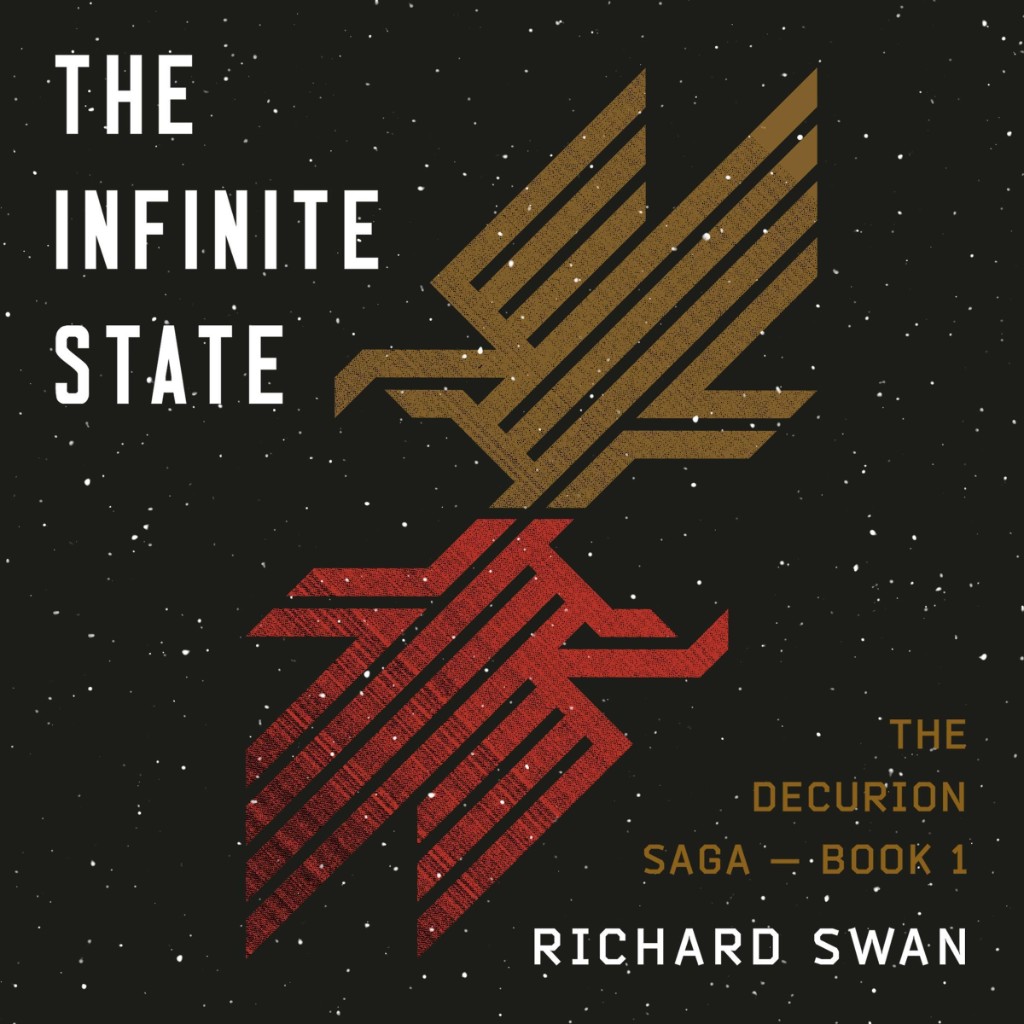
Richard Swan's first foray outside the Empire of the Wolf reads like someone handed George Orwell a Star Wars budget and told him not to waste it on spectacle. This is 1984 filtered through Andor's patience for how empires actually function day to day, and it's the best kind of introduction to a writer I'd only heard about secondhand until now.
The setup could have been a slog. Three POV characters, all embedded in different corners of the same oppressive system, all circling political and philosophical questions that other books would have rushed through or skipped entirely. Swan doesn't skip them. He lets his characters actually argue about democracy, capitalism, freedom, and what a government owes the people living under it, and none of those conversations feel like homework. I didn't expect a book this interested in political theory to never once make me want to skim ahead, but that's exactly the trick Swan pulls off.
None of the three leads are especially likable, and I mean that as a compliment. They're just trying to survive inside the Empire of Pater Aeternus, a state that has figured out how to make its citizens complicit in their own control, and survival keeps forcing them to decide who they're loyal to and who they're willing to become. Class determines everything. Fertility is treated as a civic obligation. The line between public and private life barely exists, and the whole apparatus runs on a cultural obsession with being "productive." What keeps the empire from reading as a cartoon is that it also provides healthcare and the basics of a life, so the book never lets you settle into easy condemnation. You end up understanding why people comply, which is scarier than any scene of outright brutality could have been.
Structurally, the novel splits cleanly in half. The first half plants each character in a different limb of the empire, politics, enforcement, and image management, and just lets you watch the machine work. The second half jumps to a different planet entirely, following the founding of a new nation and the empire's reaction to a threat it didn't expect. That's a big swing for a first entry in a series, and it pays off. Watching three very different storylines slowly tighten around each other was my favorite part of the whole book, and it's the reason I finished it wanting to immediately know what happens next rather than needing a break.
I don't say this about many books, but I was gripped from page one and stayed that way straight through. Swan wrote a political thriller that respects its own politics enough to actually explore them, wrapped inside a space opera that never forgets it's about people. I'm already impatient for the sequel.