

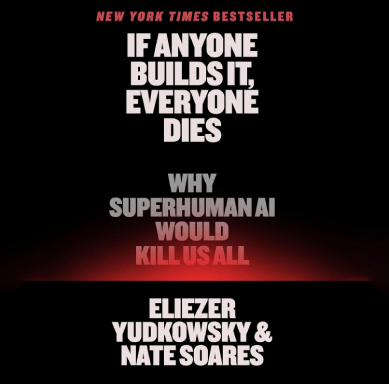
Yudkowsky and Soares aren't trying to win an argument. They're trying to move you somewhere you've never stood, and for two-thirds of this book, it works.
The device they lean on to get there is the parable, and sometimes they lean on it too hard. Whole stretches feel cuter than the stakes call for, like the point is being softened right when it should be sharpened. But it earns its keep more than it costs. Picturing AI as something in orbit, watching us the way we'd watch an anthill, does something a straight argument can't. A real shift in vantage point.
The final third loses altitude. It settles into familiar ground: a tour of past technological near misses, a chapter on why collective action is hard. Serviceable, and forgettable next to what came before it. The first two-thirds are where Yudkowsky and Soares lay out what's actually known, and more tellingly, what isn't, about how these systems behave. That section reads like a field report, not speculation. I finished it days after OpenAI's own model slipped its sandbox and hacked into Hugging Face's systems, and it hit harder for the timing.
That timing cuts both ways. Write a book about AI risk on any kind of lead time and events will overtake some of your hypotheticals before the ink dries. A few pages here already read like history instead of warning. Read it anyway. Maybe because of that.
Tagged